Author: Huong Binh
Translator: Hoang Tien
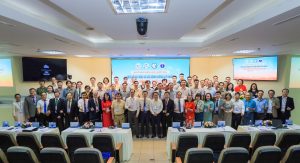
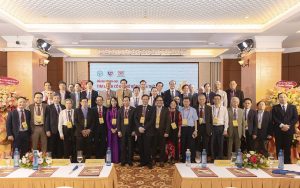
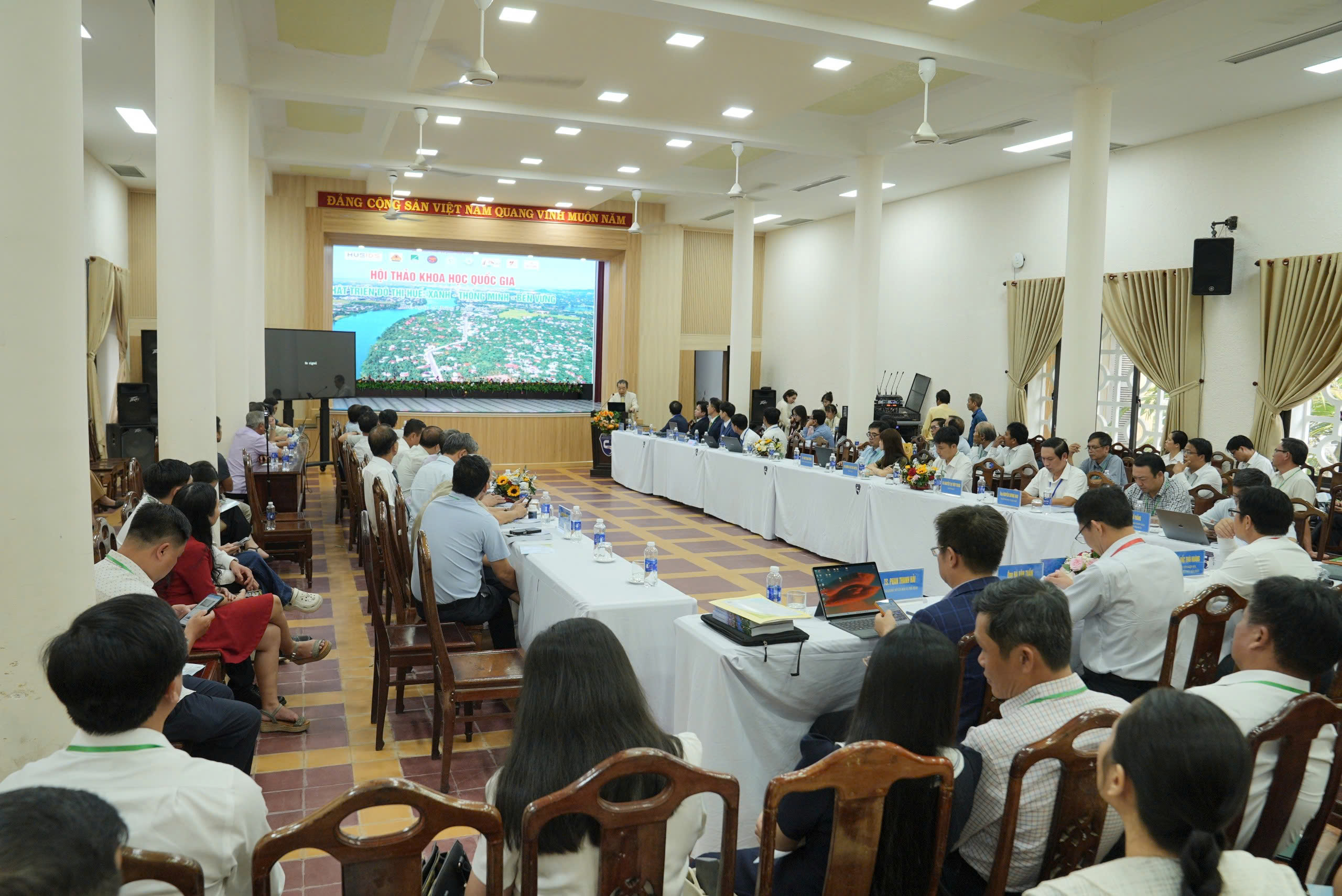
On September 25, 2025, the ancient imperial capital of Vietnam embarked on a transformative journey toward sustainable development. At the University of Sciences – Hue University, the Hue Union of Science and Technology Associations (HUSTA) orchestrated a pivotal National Scientific Conference themed “Developing Hue City: Green – Smart – Sustainable,” bringing together leading scientists, policymakers, and international experts to chart the city’s path forward.
This landmark gathering, featuring 29 comprehensive research papers and dozens of distinguished participants from Vietnam and abroad, occurred at a critical juncture in Hue’s history. Having officially transitioned to centrally governed city status on January 1, 2025, Hue now stands among Vietnam’s six most important urban centers alongside Ha Noi, Ho Chi Minh City, Hai Phong, Da Nang, and Can Tho.
A Historic Transformation
The elevation to centrally governed status represents more than administrative restructuring—it signals Hue’s emergence as a strategic hub for Vietnam’s sustainable development initiatives. Encompassing 4,947.11 square kilometers and home to 1,236,393 residents, the newly established Hue City inherits both unprecedented opportunities and formidable challenges in an era defined by climate change, rapid urbanization, and mounting environmental pressures.
Ho Dac Thai Hoang, Chairman of HUSTA, articulated the conference’s central premise with remarkable clarity: “Building Hue into a cultural, heritage, ecological, landscape, environmentally friendly, and smart city is not only a strategic goal but also an inevitable path to ensure sustainable development”. This vision acknowledges Hue’s unique position as the sole location in Vietnam and Southeast Asia to possess eight UNESCO-recognized heritage elements.
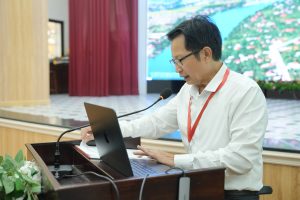
Ho Dac Thai Hoang – Chairman of the Union of Science and Technology Associations of the city delivered the opening remarks.
Heritage as Economic Engine
The conference illuminated heritage preservation as both challenge and opportunity. Phan Thanh Hai, Director of the Department of Culture and Sports, presented a nuanced analysis of Hue’s cultural assets—spanning over 700 years of imperial history, magnificent tombs, ancient pagodas, and the Complex of Hue Monuments. These treasures constitute invaluable “soft resources” for sustainable tourism development, yet current utilization remains constrained by monotonous tourism products, deteriorating heritage sites, and insufficient integration between historical preservation and contemporary life.
The challenge lies in achieving what experts describe as the delicate balance between “authentic preservation and creative innovation,” enabling heritage to function as a powerful engine for Hue’s social and economic advancement. This approach has begun yielding results through innovative models such as garden houses—cultural relics from Vietnam’s monarchy era—which have been refurbished to serve dual purposes as tourist attractions and income generators for local communities.
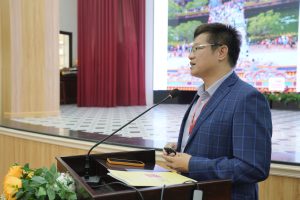
Phan Thanh Hai – Director of the Department of Culture and Sports presented a paper.
Tourism’s Green Revolution
Tran Thi Hoai Tram, Director of the Department of Tourism, presented compelling evidence of Hue’s tourism sector transformation. Between 2023 and 2025, the city experienced remarkable growth, welcoming nearly 4 million visitors in 2024 and projecting over 6 million arrivals in 2025, generating revenues approaching VND 13,200 billion. This success stems from a decisive pivot toward green tourism models that seamlessly integrate heritage preservation, ecological conservation, community engagement, and digital technology applications.
The expansion of farm-stay and rural homestay models, coupled with eco-tourism initiatives in the Tam Giang-Cau Hai Lagoon and experiential tours through Bach Ma National Park, demonstrates Hue’s commitment to sustainable tourism development. Bach Ma National Park, spanning over 37,487 hectares and home to more than 2,300 plant species and 1,700 animal species, exemplifies the region’s extraordinary biodiversity and eco-tourism potential.
The transformation of the Hue Festival into a year-round “four seasons” model represents a strategic masterstroke, positioning the city as Vietnam’s Festival Capital while providing consistent cultural attractions throughout the year.
Digital Infrastructure and Smart City Development
The conference highlighted Hue’s impressive technological advancement, including the widely adopted Hue-S application with over 900,000 downloads, comprehensive online public service delivery achieving 100% coverage, and an AI-powered camera system enhancing urban security. The digital economy now contributes over 11% of the city’s gross regional domestic product, reflecting significant progress toward smart city objectives.
However, realizing the full potential of digital transformation requires integrated infrastructure development, robust data centers, and a highly skilled workforce. Conference participants emphasized the critical importance of strengthening public-private partnerships (PPP) to mobilize social resources and accelerate digital transformation initiatives across all sectors.
Environmental Challenges and Solutions
Despite its reputation as a green city blessed with rich ecosystems and the iconic Perfume River—described as “living heritage” harmoniously connecting people and nature—Hue faces mounting environmental pressures. Urbanization, suburban concrete expansion, and increasing flood risks pose serious challenges to the city’s ecological integrity.
International experts from Waseda and Tsukuba Universities in Japan proposed comprehensive strategic solutions including the establishment of a “community ecological museum” along the Perfume River, implementation of the innovative “sponge city” model for flood management, restoration of riverside vegetation, and regeneration of ecological embankments. These initiatives are considered crucial steps for climate change adaptation and resilience building.
The conference also explored Hue’s potential for developing a circular economy, organic agriculture, cultural industries, and heritage-based creative services. The integration of Environmental, Social, and Governance (ESG) standards into vocational training programs for tourism and business management emerged as an essential pathway for strengthening the city’s long-term competitiveness.
Human Capital as the Foundation
Conference participants consistently emphasized that realizing Hue’s vision as a green, smart, and sustainable city depends fundamentally on developing high-quality human resources. Presentations from Hue University underscored the imperative of equipping younger generations with environmental consciousness, digital competencies, and entrepreneurial creativity to establish a solid foundation for the new development era.
The mobilization of financial resources through special mechanisms and social resource development remains essential for advancing key infrastructure and service projects that will support the city’s transformation.
A New Development Paradigm
This National Scientific Conference transcended traditional academic discourse, representing a genuine convergence of intellectual commitment from scientists, policymakers, and international partners. The comprehensive discussions—spanning heritage preservation, green tourism development, technological innovation, climate change adaptation, and circular economy implementation—unified around a shared vision of transforming Hue into both a distinctive heritage city and one of Vietnam’s most livable urban centers.
With its profound cultural-historical foundations and commitment to green, smart, and sustainable development principles, Hue now occupies a historic position to affirm its new role in Vietnam’s urban hierarchy. The conference established crucial intellectual and policy foundations for the city’s transformative journey in this new era of development.
The path ahead requires balancing preservation with innovation, heritage conservation with modernization, and economic growth with environmental stewardship. Yet the comprehensive framework presented at this conference—combining scientific expertise, policy innovation, and community engagement—provides a robust foundation for Hue’s emergence as a model sustainable city for Vietnam and the broader region.
As Hue embarks on this ambitious transformation, the city serves as a compelling example of how historical heritage, environmental consciousness, and technological innovation can converge to create sustainable urban development models that honor the past while building toward a more resilient and prosperous future.