Author: Cam Lai
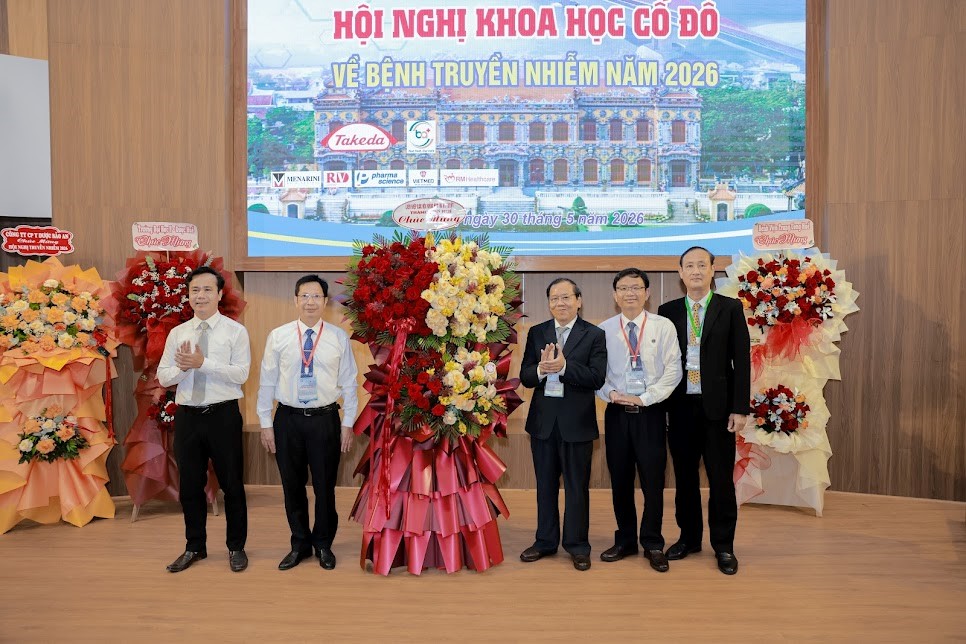
On May 30, 2026, the Hue City Infectious Diseases Association, in collaboration with the Hue Union of Science and Technology Associations and the University of Medicine and Pharmacy, Hue University, organized the 2026 Imperial City Scientific Conference on Infectious Diseases. The event aimed to proactively address the growing challenges posed by emerging infectious diseases while strengthening healthcare capacity across the region.
Attending the conference were Dr. Ho Dac Thai Hoang, President of the Hue Union of Science and Technology Associations, and Assoc. Prof. Nguyen Minh Tam, Vice Rector of the University of Medicine and Pharmacy, Hue University. Also in attendance were representatives from central and local government agencies, healthcare institutions, and professional medical associations, including leaders of the Vietnam Society of Infectious Diseases, the Central Highlands and Central Vietnam Infectious Diseases Association, the Hue Department of Health, Hue Central Hospital, as well as faculty members and students from the University of Medicine and Pharmacy. The conference attracted nearly 250 specialists and healthcare professionals from across the country.
In his opening remarks, Assoc. Prof. Tran Xuan Chuong, Vice President of the Vietnam Society of Infectious Diseases and President of the Hue City Infectious Diseases Association, emphasized that infectious and tropical diseases remain among the most significant public health challenges. In recent years, alongside recurring outbreaks and pandemics such as dengue fever, hand-foot-and-mouth disease, and COVID-19, the healthcare sector has faced the emergence and resurgence of highly dangerous infectious diseases, including melioidosis, Zika virus disease, diphtheria, and measles. He also highlighted the growing threat of antimicrobial resistance, which continues to pose serious challenges to clinical treatment. In this context, healthcare professionals on the front lines must continuously update their knowledge and clinical skills.
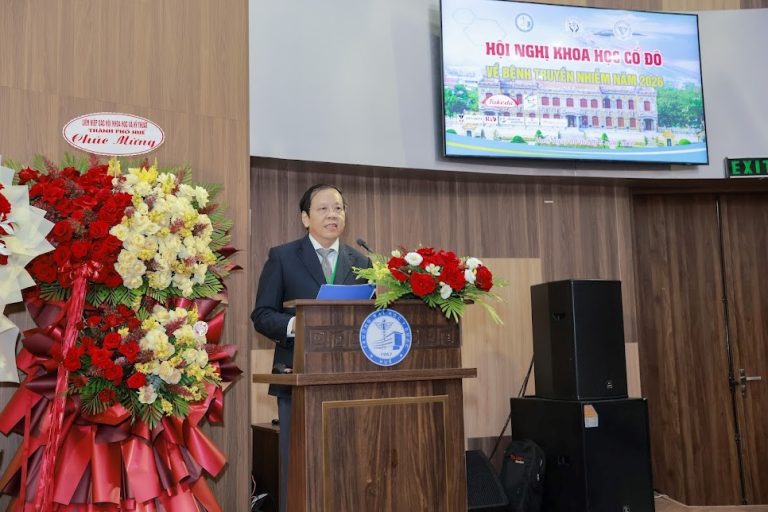
Assoc. Prof. Tran Xuan Chuong, Vice President of the Vietnam Society of Infectious Diseases and President of the Hue City Infectious Diseases Association, delivers the opening address.
Following the success of previous editions, the 2026 conference brought together nearly 20 leading experts in infectious diseases, microbiology, parasitology, and tropical medicine from major healthcare and academic institutions, including the National Hospital for Tropical Diseases, Cho Ray Hospital, Hue Central Hospital, Da Nang Hospital, the Quy Nhon Institute of Malariology, Parasitology and Entomology, and Pham Ngoc Thach University of Medicine.
The scientific program featured four thematic sessions covering major infectious diseases, emerging and re-emerging infections, viral hepatitis, and parasitic diseases. Participants shared the latest updates on dengue prevention, zoonotic diseases, sepsis management, antimicrobial resistance, meningococcal disease prevention strategies, new treatment trends for chronic hepatitis B, early prevention of hepatocellular carcinoma, as well as current issues related to parasitic and fungal infections.
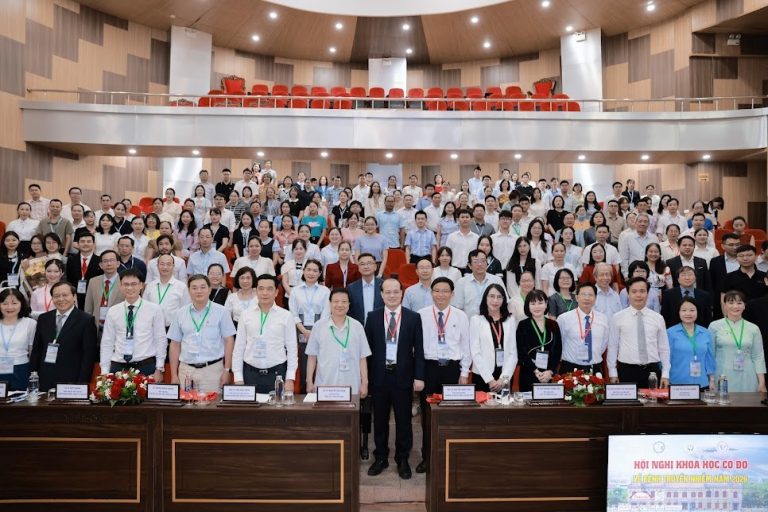
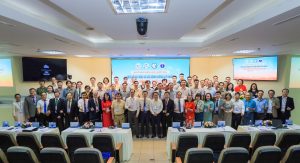
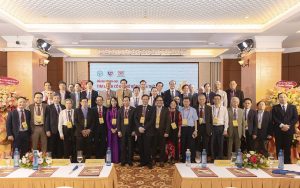
Delegates attend the 2026 Imperial City Scientific Conference on Infectious Diseases.
The conference concluded successfully following active scientific discussions and practical experience-sharing sessions. As the coordinating body for professional scientific associations, the Hue Union of Science and Technology Associations highly appreciated the efforts of the Hue City Infectious Diseases Association and the co-organizing institutions.
The success of the conference not only reaffirmed Hue’s position as a leading center for specialized healthcare, but also demonstrated the effective role of the Hue Union of Science and Technology Associations in promoting scientific research, facilitating technology transfer, and strengthening nationwide professional networks. The knowledge and solutions shared at the conference will contribute significantly to enhancing healthcare capacity in the Central and Central Highlands regions, supporting more effective disease prevention and control, and contributing to the protection of public health.
Translated by Thuy Tien